

IPS and Access Panels: Why Secure Locks Matter in Patient-facing Areas
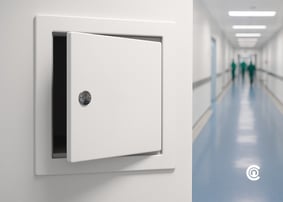
In healthcare design, many elements are carefully considered, from ventilation systems to hygiene finishes. One area however is often overlooked being the locking of IPS (Integrated Plumbing System) and access panels.
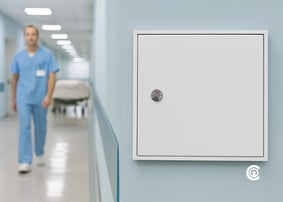
These panels are everywhere in healthcare estates: in patient bathrooms, ward corridors, clinical spaces, and staff areas. They may look like minor components, but when the locks securing them fail, the risks can be significant.
This blog examines why IPS and access panels require more than standard locks, what risks arise from legacy designs, and how modern tamper-resistant cam locks are supporting safer, more resilient healthcare environments.
Why IPS and Access Panels are Critical
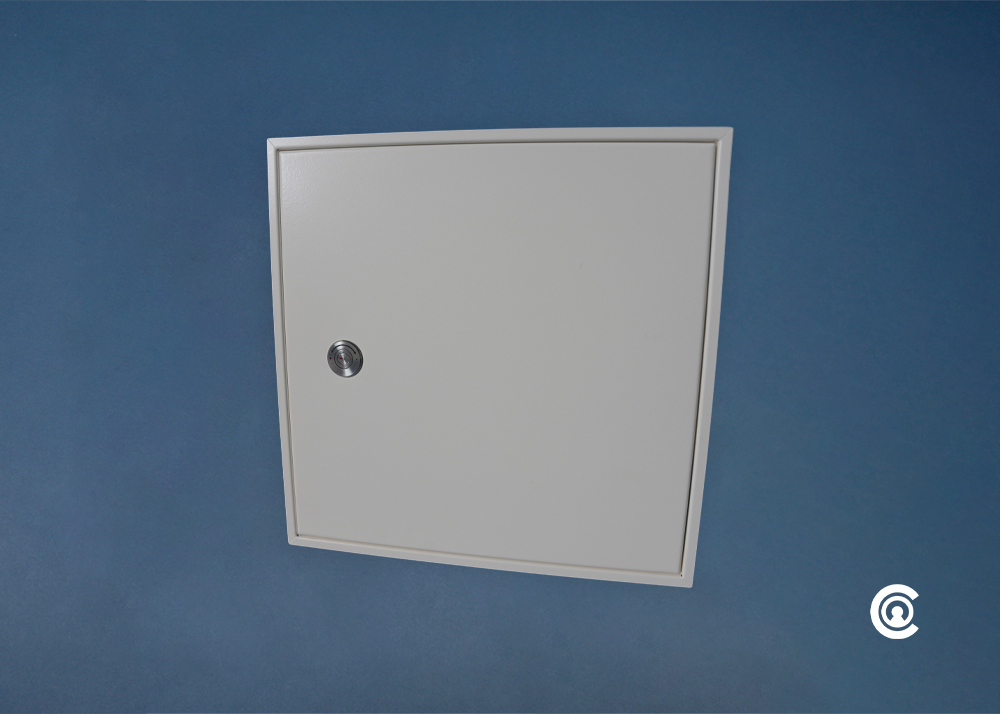
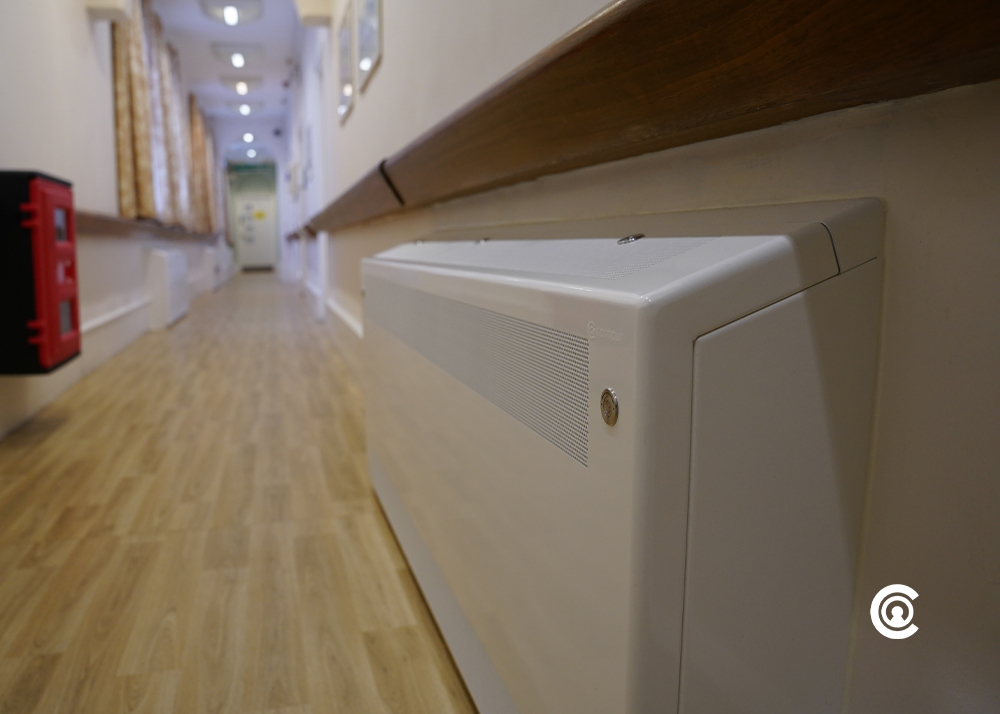
IPS panels provide access to concealed plumbing and services, keeping healthcare spaces clean, safe, and easy to maintain. Access panels allow authorised staff to reach electrical, mechanical, and network infrastructure across wards and corridors.
Both are essential for day-to-day operations, but their placement in patient-facing areas also means they are exposed to risks, including:
- Tampering and forced entry by patients or visitors.
- Exposure to live services, creating potential safety hazards.
- Hygiene concerns, as recessed locks and handles trap dirt or bacteria.
- Visual disruption, where bulky or institutional lock designs undermine therapeutic environments.
A compromised panel isn’t just a minor inconvenience, it can pose serious risks to safety, infection control, and the overall quality of care.
The Risks of Legacy Locking Solutions
Many IPS and access panels are still fitted with legacy cam locks such as:
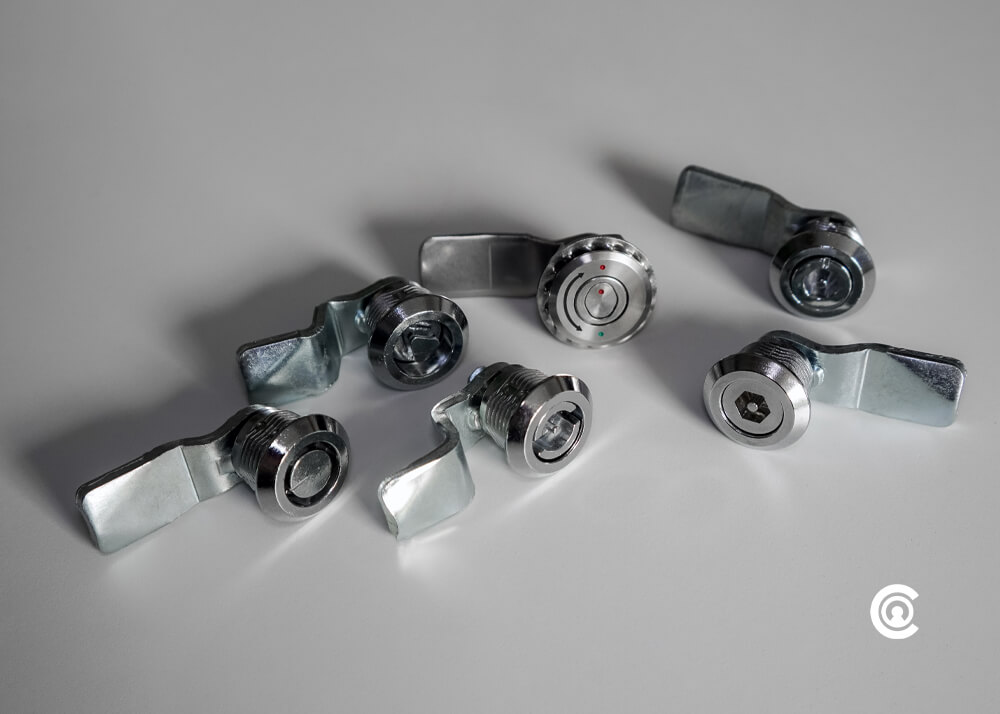
- Pin hex and crown locks, once considered secure but now easily bypassed with basic tools.
- Square head and tri-head inserts, standard across commercial buildings but not designed for patient-accessible areas.
These locks can often be forced open, introducing avoidable risks. In healthcare environments where patient welfare and infection control are critical, relying on outdated locking mechanisms leaves facilities exposed.
How Modern Cam Locks Make a Difference
Modern tamper-resistant cam locks are designed with healthcare-specific challenges in mind. Their features provide a more robust approach to panel security:
- Three-point engagement mechanisms reduce the risk of manipulation.
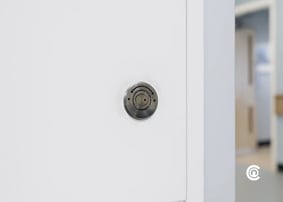
- Smooth, flat-surfaced faces simplify cleaning and help meet infection control standards.
- Low-profile, ligature-resistant designs minimise hazards in mental health or custodial healthcare settings.
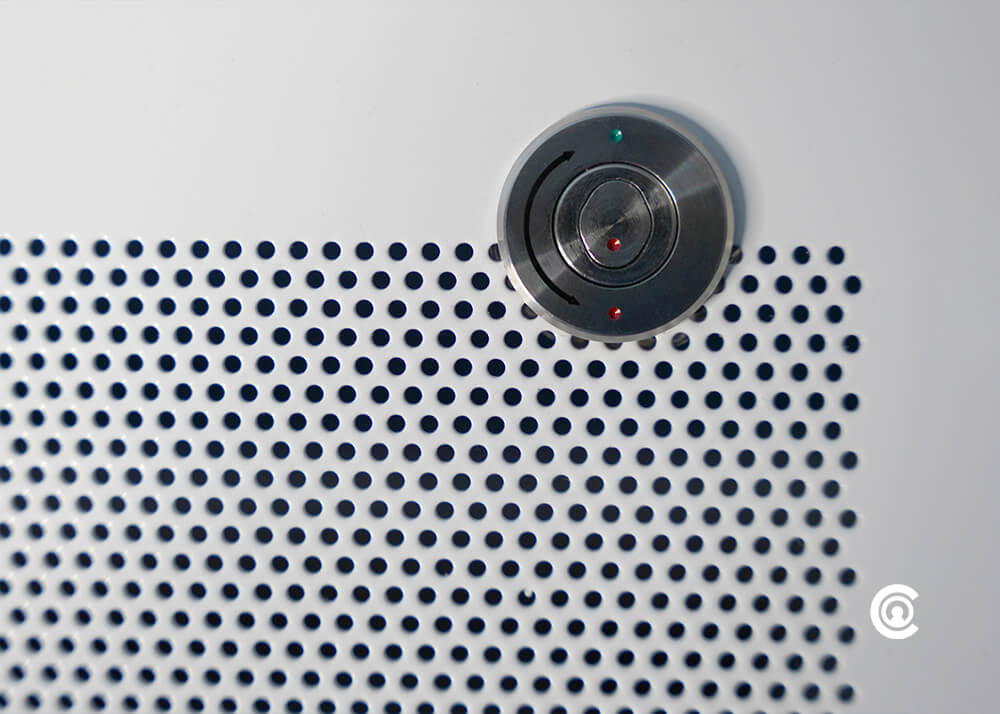
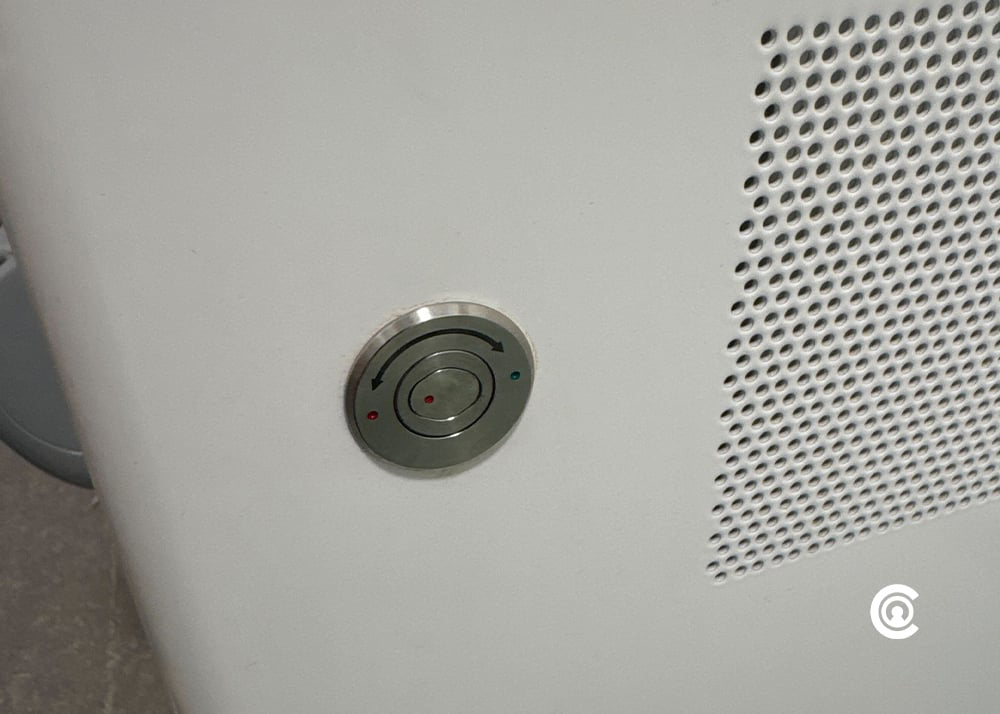
- Visual engagement indicators allow staff to confirm straight away that panels are properly secured.
- Retrofittable footprints make upgrading straightforward, with no need for expensive modifications.
By upgrading locks, estates teams can protect panels from tampering, improve hygiene, and extend the lifespan of existing infrastructure.
Supporting Safer Healthcare Environments
Access to plumbing and electrical systems will always be necessary in healthcare estates, but access should be controlled, safe, and secure.
By specifying or retrofitting tamper-resistant cam locks on IPS and access panels, healthcare providers can:
- Reduce risks of unauthorised access.
- Support infection control protocols.
- Maintain the therapeutic design of patient areas.
- Minimise downtime and reduce costly repairs.
Small changes at the component level can make a significant difference across entire estates.
Secure the Access Points that Matter Most
IPS and access panels may be small parts of a healthcare environment, but the risks of inadequate locks are anything but small. From patient safety to infection control, choosing the right lock makes a measurable impact.
Whether you’re upgrading existing panels or specifying new builds, modern tamper-resistant cam locks provide a fast, cost-effective way to improve security and resilience.
📞 Call us: 01952 890158
📧 Email: sales@contoursecure.co.uk
🌐 Or visit: www.contoursecure.co.uk to request a sample or discuss how secure locks can support safer healthcare estates.
Author Details

Recommended Blog Articles
Please take a look at our recent Blog Articles to see how we've applied safer security locks to a variety of different projects and applications.
Click to see all Blog Articles and use the filters to find projects similar to yours.
How One Small Design Choice Can Transform an Entire Estate
In complex mental health estates, transformation rarely comes from sweeping change. More often, it comes from a series of small, deliberate design decisions that quietly reshape how environments ...
In complex mental health estates, transformation rarely comes from sweeping change. More often, it comes from a series of small, deliberate design decisions that quietly reshape how environments function over time. This is especially true when considering cam locks in mental health environments.One of the most overlooked of these decisions is the specification of tamper resistant cam locks. Often treated as a minor hardware detail, cam locks sit at the intersection of safety, access, maintenance, and long-term risk management. When specified thoughtfully, a secure cam lock approach can help bring clarity and consistency across an entire estate. Where small specification decisions set the direction for the whole estate Standardisation does not begin at handover. It begins from the moment a component is named on a drawing or schedule.In mental health environments, loosely defined specifications such as “cam lock” or “lock equal and approved” can introduce unintended variation. Over time, that variation compounds across cam locks in mental health environments, resulting in inconsistent outcomes including:• Inconsistent ligature risk profiles• Multiple access arrangements for staff• Increased pressure on estates and maintenance teams• Difficulty maintaining consistent safety standards across sitesA single, clearly defined mental health cam lock specification helps prevent this drift. By identifying one approved secure cam lock or security cam locks solution, estates teams can set a repeatable standard that carries through new builds, refurbishments, and reactive replacements. The hidden influence of everyday hardware Cam locks appear on almost every mental health estate. IPS panels, cupboards, service risers, radiator covers, and secure enclosures all rely on them. As a result, cam locks in mental health environments are handled daily by staff and sit within reach of service users.Because they are so common, the impact of specifying the right secure cam locks is often underestimated. These components must perform reliably in high-use, high-risk settings. When security cam locks are purpose-designed for mental health environments, they support anti-ligature principles, resist manipulation, and maintain consistent performance over time. When they are not, poorly suited cam locks can quietly undermine otherwise well-considered designs. Standardisation without restriction There is a persistent belief that standardisation limits flexibility. In practice, the opposite is true when the right cam lock system is chosen.A single tamper resistant cam lock platform can be configured for different applications through variations in cam length and fixing method. This allows secure cam locks to be used across steel, timber, and composite substrates without introducing additional lock types. As a result, estates teams and specifiers can:• Apply one approved solution across multiple environments• Support both retrofit and new-build projects• Avoid introducing new cam locks or access methodsThis approach delivers flexibility at the design stage, while maintaining simplicity and control at the operational stage. Long-term impact on estates and facilities teams The benefits of thoughtful specification are rarely immediate, but they are long-lasting. Consistent use of cam locks, supported by a single secure cam lock standard, delivers practical benefits over time.Standardised security cam locks support simplified maintenance and spares management, faster fault resolution, reduced training requirements, and clearer audit and compliance processes. For estates and facilities teams managing large, evolving portfolios, these efficiencies reduce day-to-day friction and free up time for higher-value activity. Aligning capital projects with the existing estate One of the greatest challenges in healthcare estates is ensuring that new developments do not reintroduce legacy risks or inconsistencies.By treating cam locks in mental health environments as a standardised safety system rather than a commodity item, capital projects can align more effectively with existing estate strategies. Using the same secure cam lock approach across projects supports safer handovers, smoother occupation, and greater confidence that standards are being upheld across the organisation. Conclusion: turning insight into informed decisions True standardisation is not achieved through mandates alone. It is built through informed, repeatable design choices that stand up to real-world use.Specifying the right tamper resistant cam lock may seem like a small decision, but its influence reaches far beyond the door or panel it secures. Across an entire estate, that single choice can reduce risk, simplify maintenance, and support safer outcomes through consistent use of cam locks and security cam locks.If you are reviewing specifications or planning upcoming works, the most effective way to build confidence is to assess solutions in practice.Request a free sample of Contour Secure’s tamper resistant secure cam lock and see how one small design choice can support safer, more consistent outcomes across your projects and estate. 📞 Call us: 01952 890158📧 Email: sales@contoursecure.co.uk
24 February 2026
Simplifying Access, Maintenance, and Risk Through Better Specification
In NHS mental health environments, specification decisions are rarely just technical. They sit at the intersection of safety, operational efficiency, compliance, and long-term estate management. Yet ...
In NHS mental health environments, specification decisions are rarely just technical. They sit at the intersection of safety, operational efficiency, compliance, and long-term estate management. Yet one area that is often underestimated is access control at the enclosure level. Cam locks may be small components, but the consequences of how cam locks are specified can ripple across an entire estate, particularly in cam locks in mental health environments.For estates and facilities teams managing multiple sites, varied building ages, and constant adaptation, standardisation is not about removing choice. It is about reducing unnecessary complexity while strengthening risk control through a consistent approach to cam locks and secure cam lock selection. The hidden cost of inconsistent access solutions Over time, many mental health estates accumulate a wide mix of security cam locks. Different suppliers, different key types, different fixing methods, and different risk profiles all contribute to growing variation. Often this happens gradually, driven by project-by-project decisions rather than a coordinated strategy for cam locks in mental health environments.The result is familiar to most estates teams. Maintenance becomes slower because staff need access to multiple keys and spares linked to different cam locks. Training becomes more complex as teams need to understand which security cam locks are suitable in which areas. Audits and compliance checks take longer because risk assessments tied to cam locks are harder to evidence consistently.None of these issues are dramatic in isolation, but together they consume time, increase operational risk, and place additional pressure on already stretched teams. Why standardisation matters in mental health environments In mental health settings, access control is not just about preventing unauthorised entry. It is about designing out opportunity for harm, reducing tampering, and ensuring that only approved staff can access critical areas safely. This is why cam locks in mental health environments require more careful consideration than generic applications.Specifying a single, approved approach to secure cam lock use helps bring clarity. When tamper resistant cam locks and security cam locks are used consistently across enclosures, teams gain confidence that the same level of risk control is being applied whether a cam lock is fitted to a radiator cover, an IPS panel, or an electrical cabinet.This consistency supports safer environments for patients while also making life easier for the people responsible for maintaining cam locks day to day. Standardisation does not mean uniformity A common concern among specifiers is that standardisation removes flexibility. In practice, the opposite is often true. A well-designed mental health cam lock system allows cam locks to be used across materials, door thicknesses, and enclosure types without introducing new lock formats or new risks.Modern security cam locks can be specified to work across steel, timber, and composite panels, and across both retrofit and new-build projects. This allows capital projects and estates teams to respond to architectural and clinical requirements while still maintaining a consistent secure cam lock standard across the estate.The key difference is that flexibility is built into the cam lock system, not created by adding more lock types. Maintenance, access, and long-term efficiency From an estates perspective, the real value of better specification is often felt over time. Standardised cam locks and a single secure cam lock approach simplify spares management, reduce call-out times, and make fault resolution faster. Staff training becomes more straightforward because there is less variation in security cam locks to manage.Just as importantly, audits and compliance reviews become clearer. When one approved cam lock solution is used consistently, it is easier to demonstrate that access risks associated with cam locks in mental health environments have been considered and controlled across the estate.These efficiencies may not be immediately visible at handover, but they accumulate year after year. Better specification starts with small decisions Specifying for standardisation does not require a full redesign of an estate. It often starts with recognising that small components, like cam locks, play an outsized role in safety and operational performance.By taking a more strategic approach to specifying secure cam lock and security cam locks, estates and facilities teams can simplify access, reduce maintenance burden, and strengthen risk management without compromising clinical needs or design intent. Conclusion: see the difference for yourself Thoughtful specification is easiest when you can evaluate solutions first-hand. If you are reviewing access strategies across mental health environments, seeing how a secure cam lock performs in real-world conditions can make the decision clearer.To support that process, we offer a free sample of our tamper resistant cam lock, allowing you to assess its suitability for your estate before making any specification decisions. 📞 Call us: 01952 890158📧 Email: sales@contoursecure.co.uk
17 February 2026
Building a Safer Future: How Standardisation Supports Long-term Estate Resilience
In healthcare estates, every investment should deliver long-term value. For NHS Estates and Facilities teams managing safety-critical environments, that means implementing systems that are durable, ...
In healthcare estates, every investment should deliver long-term value. For NHS Estates and Facilities teams managing safety-critical environments, that means implementing systems that are durable, maintainable, and adaptable as standards evolve. Contour Secure’s Standardisation Programme helps achieve exactly that. By unifying safety-critical enclosures under one tamper-resistant locking system, estates not only improve safety today, but they also build resilience for tomorrow. Why Resilience Matters Mental health environments are dynamic spaces that must adapt to changing patient needs, regulatory updates, and operational pressures. Over time, these changes can expose weaknesses in estate design, particularly when multiple locking systems are in use. Legacy fittings may not meet updated standards, replacement parts can become obsolete, and varying specifications make long-term maintenance inconsistent and costly. By standardising now, NHS Trusts can remove those future obstacles. A single locking platform ensures consistency, simplifies future upgrades, and maintains compliance as regulations evolve. Futureproofing Through Consistency Standardisation futureproofs healthcare estates by creating a unified, easily managed foundation. When every radiator guard, access panel, piece of furniture and fitted enclosure uses the same tamper-resistant lock, estates benefit from: Predictable maintenance: Standard components simplify repair and replacement, even years later. Continued compliance: One proven standard supports future HTM and CQC updates. Procurement efficiency: Bulk ordering and standard spares reduce costs and lead times. Sustainability: Fewer unique parts mean less waste and a smaller environmental footprint. A consistent standard makes estates more adaptable, allowing upgrades or expansions to integrate seamlessly with existing safety systems. Designed for Longevity Contour Secure’s tamper-resistant locking system is designed for durability and long-term use in healthcare settings. Each lock provides: Robust, anti-ligature performance Flush-fit, wipe-clean hygiene design Reliable operation under repeated use These qualities not only protect patients and staff but also reduce the frequency of maintenance interventions, saving time, resources, and cost over the lifetime of the estate. A Long-term Partnership Resilience is built through partnership. Contour Secure continues to support NHS Estates teams beyond installation, offering guidance on system maintenance, compliance documentation, and future estate planning. By embedding a standardised approach today, Trusts create an adaptable infrastructure that supports safety, efficiency, and innovation well into the future. Conclusion: Standardisation as a Strategy for the Future Standardisation isn’t just about solving today’s problems; it’s about preparing for tomorrows. By adopting Contour Secure’s tamper-resistant locking system, NHS Estates teams can build long-term resilience into their infrastructure, ensuring that their environments remain safe, compliant, and easy to manage as healthcare standards continue to evolve. Futureproof your estate with Contour Secure. Standardise your locking systems today and build a safer, more resilient environment for the years ahead. 📞 Call us: 01952 890158📧 Email: sales@contoursecure.co.uk
14 January 2026
From Audit to Implementation: How Contour Secure Supports Standardisation Across Estates
For many NHS Estates and Facilities teams, the idea of standardising safety systems across multiple sites can feel daunting. With busy live environments, legacy infrastructure, and ongoing ...
For many NHS Estates and Facilities teams, the idea of standardising safety systems across multiple sites can feel daunting. With busy live environments, legacy infrastructure, and ongoing maintenance demands, large-scale upgrades must be carefully planned and expertly executed. That’s why Contour Secure’s Standardisation Programme has been designed as a managed, step-by-step process. From initial audit to full implementation, our approach ensures that the transition to one tamper-resistant locking system is safe, efficient, and tailored to the unique needs of mental health environments. Step 1: The Estate Audit Every successful standardisation journey begins with understanding the current landscape.Our team starts with a comprehensive audit, identifying where legacy locks, mixed systems, or non-compliant fittings are currently in use. The audit process includes: Site inspections to review enclosures such as radiator covers, IPS panels, and fitted furniture. Documentation mapping to record existing lock types and key systems. Risk assessment to highlight safety, ligature, and hygiene concerns. This audit provides the foundation for a strategic upgrade plan, giving estates full visibility of their current position before any changes are made. Step 2: The Upgrade Plan Following the audit, Contour Secure develops a phased upgrade plan designed to minimise disruption and align with estate priorities. This includes: Detailed scheduling around operational needs and ward occupancy. Specification alignment to ensure new locks integrate seamlessly with existing enclosures. Procurement coordination to manage materials efficiently. The goal is a smooth transition from multiple lock types to one consistent, tamper-resistant standard, without affecting day-to-day operations. Step 3: Supply and Installation Implementation is carried out by experienced, accredited installation teams who understand the challenges of working in live mental health environments. All installations follow a strict safety and hygiene protocol to ensure patient welfare and minimal disruption. Each lock is fitted, tested, and documented in line with NHS standards, providing Estates teams with full traceability and confidence in compliance. Contour Secure’s tamper-resistant locking system is manufactured in the UK, with durable materials designed for long-term reliability in healthcare settings. Step 4: Ongoing Support and Documentation Our partnership doesn’t end at installation. Contour Secure provides post-project support that includes: Staff training on access procedures and maintenance. Comprehensive documentation to support CQC and HTM audits. Maintenance guidance to ensure continued safe performance. We understand that standardisation is an ongoing commitment. Our support helps ensure the system remains effective and compliant long after the initial rollout is complete. A Partnership Built for Healthcare Contour Secure has extensive experience working within mental health environments, understanding the sensitivities and operational demands these settings require. By acting as a collaborative partner, not just a supplier, we help Estates and Facilities teams achieve a safer, more consistent environment; one that reduces administrative strain and enhances patient safety. Conclusion: Streamline for Safety and Savings Standardisation doesn’t have to be complex. With the right partner, it becomes a structured, supported process that delivers lasting results. From the first audit to the final installation, Contour Secure works alongside NHS Estates teams to simplify, strengthen, and secure their environments through one proven, tamper-resistant locking standard. Partner with Contour Secure to deliver a safe, compliant, and consistent estate through our full Standardisation Programme. 📞 Call us: 01952 890158📧 Email: sales@contoursecure.co.uk
14 January 2026
Healthcare Locking Solutions: A Complete Guide to Safety, Hygiene, and Retrofit Options
Healthcare facilities face increasing pressure to deliver environments that are secure, hygienic, and cost-effective. From IPS panels in bathrooms to furniture in bedrooms and access hatches in ...
Healthcare facilities face increasing pressure to deliver environments that are secure, hygienic, and cost-effective. From IPS panels in bathrooms to furniture in bedrooms and access hatches in corridors, locking systems are a small but critical component of this goal. Too often, locks are overlooked. Yet they directly affect patient safety, infection control, operational efficiency, and long-term maintenance costs. This complete guide brings together the key considerations for healthcare estates, specifiers, and product manufacturers when it comes to cam locks. It explores the risks of outdated designs, the benefits of modern alternatives, and practical retrofit solutions that allow healthcare teams to upgrade without disruption. Why Locks Deserve More Attention in Healthcare When most people think about healthcare safety, they picture ward layouts, clinical equipment, or staff training, but locks are present across every part of an estate: IPS panels in bathrooms and clinical areas Access panels in corridors and service spaces Furniture in bedrooms, treatment rooms, and staff areas Storage units for medicines and equipment Each lock interacts with staff, patients, and cleaning teams daily. If these locks are outdated, they can become weak points that compromise safety and efficiency. The Safety Risks of Legacy Locks Legacy lock designs such as pin hex, crown, tri-head, and square-head inserts were never intended for the unique demands of healthcare. Their weaknesses include: Tampering: Easily opened with improvised tools. Ligature risks: Protruding faces and sharp edges create hazards in mental health settings. Mechanical weakness: Older locks may fail under repeated use, causing downtime and costly repairs. In healthcare environments, these risks can have serious consequences, from patients accessing dangerous services behind panels to repeated maintenance callouts that disrupt ward operations. The Hygiene Case: Why Flat-surfaced Locks Matter Infection control is a constant challenge across estates. Yet traditional locks often have recessed keyways and ridges that trap dirt and bacteria, undermining cleaning regimes. Flat-surfaced cam locks, by contrast, provide: Smooth, wipe-clean faces that integrate into infection control protocols. Faster cleaning times, reducing workload for estates and cleaning teams. Antimicrobial compatibility, allowing coatings to perform effectively. Visual consistency, supporting modern, therapeutic healthcare design. By standardising flat-surfaced locks across facilities, estates teams can strengthen infection control without adding complexity. Retrofitting for Resilience One of the most practical advantages of modern cam locks is their retrofittable design. Many can be fitted directly into the same footprint as standard locks, offering: Quick installation with minimal downtime. Cost savings compared to replacing entire panels or furniture units. Improved resilience with locks designed for tamper-resistance and hygiene. Extended asset life, helping budgets go further. Retrofitting ensures healthcare estates can raise safety standards immediately, without waiting for major refurbishment programmes. Where Locks Matter Most Locks are present in every corner of healthcare estates. Some of the highest-impact applications include: IPS Panels: Securing plumbing and mechanical services in bathrooms and clinical areas. Access Panels: Protecting electrical and mechanical services in corridors. Furniture Locks: Used on built-in storage or patient-area furniture, where low-profile and hygienic designs prevent ligature and infection risks. Ward Environments: Bedrooms, bathrooms, and treatment areas where consistency of lock design helps staff operate efficiently while keeping spaces secure. By recognising the variety of these applications, healthcare teams can apply a holistic approach to lock specification and upgrades. Raising the Bar for Healthcare Locking Standards The healthcare sector is evolving. Standards for safety, hygiene, and design have become more stringent, and locks must keep pace. Key design features in modern cam locks include: Three-point engagement mechanisms that increase tamper resistance. Compression rings that reduce rattle, improve strength, and deter manipulation. Low-profile faces that minimise ligature risks and support infection control. Visual lock indicators to help staff confirm locked/unlocked status immediately. These aren’t just incremental upgrades, they represent a step-change in how locks contribute to safety, hygiene, and resilience across healthcare estates. Small Details, Big Impact From IPS panels in bathrooms to furniture in bedrooms, locks may seem like a small detail in healthcare estates, but they have an outsized impact on safety, hygiene, and long-term costs. By adopting modern tamper-resistant, flat-surfaced cam locks, estates teams and manufacturers can reduce risks, support infection control, and extend asset life, all while keeping disruption and budgets under control. 📞 Call us: 01952 890158📧 Email: sales@contoursecure.co.uk🌐 Or visit: www.contoursecure.co.uk to request a sample or discuss how Secure cam locks can support your next healthcare project.
14 January 2026
Leave a Comment